-
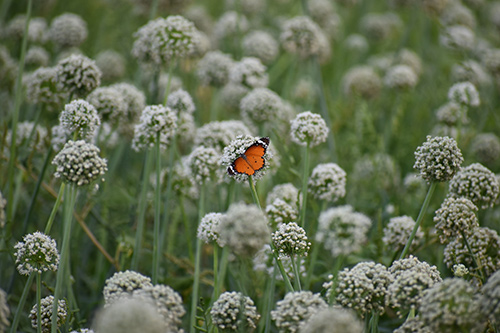 July 16 Friday10:00 AM → 11:30 AMSessions: 1Instructor: Ani JamgyalLocations: ZoomIn this brief introduction, we will consider what is involved in designing a garden area that supports wildlife throughout the year. We will explore the three basic needs of wildlife (food, shelter and water), and consider which native and adapted plants best support those needs. We’ll also look at several different kinds of landscape design, and how they... read moreIn this brief introduction, we will consider what is involved in designing a garden area that supports wildlife throughout the year. We will explore the three basic needs of wildlife (food, shelter and water), and consider which native and adapted plants best support those needs. We’ll also look at several different kinds of landscape design, and how they function to support the health of both wildlife and humans. After receiving my PhD in plant physiology, I moved to New Mexico 30 years ago. Since then, I’ve been working outside in all kinds of weather doing all kinds of work related to my love of native plants—installing habitat gardens; conducting botanical site surveys in the wilds of the southwest deserts; teaching biology and medicinal plant biochemistry; selling native plants at local retail nurseries; and disappearing into the mountains for meditation retreats.
 -
 June 12 Saturday9:30 AM → 11:00 AMSessions: 1Instructor: Ron FriederichLocations: UNM Tree TourStroll through the University of New Mexico with Ron Friederich as he identifies and discusses some of the campus trees and other plants. An oasis in the high desert, the campus was designated an arboretum in 1994. A broad-brimmed hat and sunglasses are advised. Plenty of on-campus parking available on Saturdays. Limited enrollment. Ron Friederich, a... read moreStroll through the University of New Mexico with Ron Friederich as he identifies and discusses some of the campus trees and other plants. An oasis in the high desert, the campus was designated an arboretum in 1994. A broad-brimmed hat and sunglasses are advised. Plenty of on-campus parking available on Saturdays. Limited enrollment. Ron Friederich, a retired physician, has given various tours for Oasis at the Albuquerque BioPark. He authored a photo guidebook of the Botanic Garden for the BioPark docents. In 1991, he received the Martin Luther King Human Rights Award for establishing the first Eye Clinic at Healthcare for the Homeless, where he volunteered for 26 years.
 -
Out of stock
June 19 Saturday9:30 AM → 11:00 AMSessions: 1Instructor: Ron FriederichLocations: UNM Tree TourSee class... read moreSee class #
-
June 26 Saturday9:30 AM → 11:00 AMSessions: 1Instructor: Ron FriederichLocations: UNM Tree TourSee class... read moreSee class #
-
June 14 Monday12:30 PM → 02:00 PMSessions: 1Instructor: Charles FleddermannLocations: ZoomIn their 2008 report, the National Academy of Engineering identified developing affordable solar energy as one of the Grand Challenges for Engineering in the 21st Century. Today, solar energy provides a small fraction of the electricity used in the US, but is poised to make increasing contributions to electrical energy consumption nationwide. In this talk,... read moreIn their 2008 report, the National Academy of Engineering identified developing affordable solar energy as one of the Grand Challenges for Engineering in the 21st Century. Today, solar energy provides a small fraction of the electricity used in the US, but is poised to make increasing contributions to electrical energy consumption nationwide. In this talk, we will look at the current situation and will describe the innovations that will help make solar energy affordable. Dr. Charles (Chuck) Fleddermann is a professor of electrical engineering and associate dean of engineering at UNM. He has taught courses on professionalism and ethics in engineering at UNM as well as to the larger engineering community. His book, Engineering Ethics, is now in its fourth edition. Fleddermann received his PhD in electrical engineering from the University of Illinois at Urbana-Champaign.
-
June 24 Thursday10:00 AM → 11:30 AMSessions: 1Instructor: Lawrence AndersonLocations: ZoomFor over one hundred and fifty years the concept of recording musical sounds so that they could be played back at a later time has captivated scientists and engineers. In this talk I will trace this history, starting from the first experiments with a pen tracing a wave on a smokey drum to the modern world where all of our music resides ephemerally in the... read moreFor over one hundred and fifty years the concept of recording musical sounds so that they could be played back at a later time has captivated scientists and engineers. In this talk I will trace this history, starting from the first experiments with a pen tracing a wave on a smokey drum to the modern world where all of our music resides ephemerally in the cloud as a collection of ones and zeros. Lawrence Anderson earned a PhD in electrical engineering from Stanford University and spent most of his career at what was then AT&T Bell Laboratories, where he was involved in some of the first experimental applications of lasers. He headed the group that designed optical components for the first fiber optic transatlantic cable. He lectured for many years on technical subjects for the Institute for LifeLong Learning for New Mexicans.
-
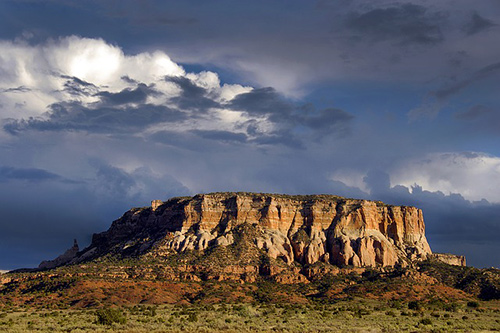 August 10 Tuesday10:00 AM → 11:30 AMSessions: 1Instructor: John GeissmanLocations: ZoomJohn Geissman presents a general overview of the geology of New Mexico, with a brief but important introduction to the general concepts of deep geologic time and the overall geologic setting of the western United States. Geissman includes a summary of the history of geologic changes that have affected New Mexico and briefly touch on the origin of these... read moreJohn Geissman presents a general overview of the geology of New Mexico, with a brief but important introduction to the general concepts of deep geologic time and the overall geologic setting of the western United States. Geissman includes a summary of the history of geologic changes that have affected New Mexico and briefly touch on the origin of these changes. John Geissman is a professor emeritus of Geoscience at the University of Texas at Dallas and the University of New Mexico. He received a B.S., M.S., and Ph.D. in Geology (now Earth and Environmental Sciences) from the University of Michigan. He is a Past President of the Geological Society of America as well as the editor for the GSA Bulletin. He has over 300 peer-reviewed science journal contributions.
 -
July 8 Thursday10:00 AM → 11:30 AMSessions: 1Instructor: David A CrossleyLocations: ZoomScientists are usually pictured as thoughtful, cultured representatives of mankind's finest intellectual pursuit. Perhaps humbly accepting a Nobel Prize, or magnanimously crediting another scientist's work when receiving accolades. The truth is less honorable. Many scientists, including famous household names, were ..well, scoundrels. There are... read moreScientists are usually pictured as thoughtful, cultured representatives of mankind's finest intellectual pursuit. Perhaps humbly accepting a Nobel Prize, or magnanimously crediting another scientist's work when receiving accolades. The truth is less honorable. Many scientists, including famous household names, were ..well, scoundrels. There are plagiarists, liars, and credit-grabbers, as well as adulterers, racists, bigots and bullies. David Crossley introduces a few of the most despicable, and reveals things about iconic heroes that have been swept under the rug. David Crossley has degrees in both electrical and mechanical engineering; he retired from a 40-year career in the aerospace arena. He taught electromagnetics at New Mexico State University, performed electronic warfare operations in five war zones with the Air Force out of Kirtland Air Force Base, and is now playing oboe with the Albuquerque Philharmonic.
-
 July 21 Wednesday10:00 AM → 11:30 AMSessions: 1Instructor: Thomas DhanensLocations: ZoomWhy do discussions turn into arguments? We don’t consciously choose to start arguments. We usually don’t feel we are to blame for them. They don’t reflect our better self and, afterward, we usually regret some of our behavior. So what goes wrong? Why do we unintentionally slip into such a destructive mental and emotional state? Winning or losing,... read moreWhy do discussions turn into arguments? We don’t consciously choose to start arguments. We usually don’t feel we are to blame for them. They don’t reflect our better self and, afterward, we usually regret some of our behavior. So what goes wrong? Why do we unintentionally slip into such a destructive mental and emotional state? Winning or losing, right or wrong, fair or unfair, victim or instigator – how can we make sense of it all? Dr. Tom Dhanens is a clinical psychologist who practiced in the midwest for 45 years. He had an office practice, did hospital consultation and community agency consultations. He was the sole staff neuropsychologist at Trinity Medical Center in Illinois for 30 years, evaluating dementia and CVA patients. Earlier, he was Director of a Community Mental Health Center in Wisconsin. Since retiring to New Mexico, he published, “Why Argue? The Psychology of Arguments”.
 -
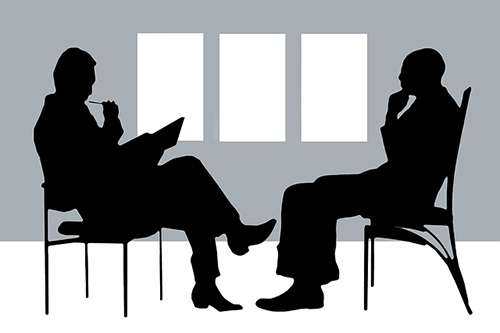 August 5 Thursday10:00 AM → 11:30 AMSessions: 1Instructor: Thomas DhanensLocations: ZoomThe limitations of human nature that cause personal arguments also contribute to political and social polarization. We have innate tendencies to perceive threats, place blame and look for simple answers. Social media and news coverage capture our attention, reinforce our existing biases and feed an us-versus-them mentality. Stereotyping and de-humanization... read moreThe limitations of human nature that cause personal arguments also contribute to political and social polarization. We have innate tendencies to perceive threats, place blame and look for simple answers. Social media and news coverage capture our attention, reinforce our existing biases and feed an us-versus-them mentality. Stereotyping and de-humanization render us unable to empathize with outsiders or understand their thinking and behavior. This lecture will explain the psychological basis for some of these important issues. See bio #
 -
May 25 Tuesday10:00 AM → 11:30 AMSessions: 1Instructor: Matthew BarbourLocations: ZoomBetween 2002 and 2004, the Office of Archaeological Studies performed excavations behind Santa Fe’s Palace of the Governors. This project recovered over 700,000 artifacts, each with a story to tell. Yet, some of these items are more fascinating than others. Objects, such as an Aztec bowl with the power to cure acne and the slag-lined cupel from Battersea... read moreBetween 2002 and 2004, the Office of Archaeological Studies performed excavations behind Santa Fe’s Palace of the Governors. This project recovered over 700,000 artifacts, each with a story to tell. Yet, some of these items are more fascinating than others. Objects, such as an Aztec bowl with the power to cure acne and the slag-lined cupel from Battersea Works in England, have the potential to shed light on lesser known aspects of New Mexico’s often sordid and colorful past. This presentation examines seven of the most bizarre artifacts found during the archaeological excavations. Matthew Barbour holds BA and MA degrees in anthropology from UNM and works for the NM Department of Cultural Affairs. He is the regional manager of Coronado and Jemez Historic Sites. Under Barbour's management, Coronado Historic Site received an Award of Merit from the American Association for State and Local History and the Jemez Historic Site received the Archaeology Heritage Preservation Award. He has published more than 200 nonfiction articles and monographs.
-
May 27 Thursday10:00 AM → 11:30 AMSessions: 1Instructor: Roland PenttilaLocations: ZoomThe class will "tour" Central Avenue from the railroad tracks near 1st Street west eight blocks to Robinson Park. We will talk about how this area came to be and the differences between this "New Town" and where Albuquerque was founded in what we now refer to "Old Town." Buildings that existed but are now gone will be discussed and shown in photographs.... read moreThe class will "tour" Central Avenue from the railroad tracks near 1st Street west eight blocks to Robinson Park. We will talk about how this area came to be and the differences between this "New Town" and where Albuquerque was founded in what we now refer to "Old Town." Buildings that existed but are now gone will be discussed and shown in photographs. Older photos will be contrasted with current photos of how that area looks now. It is a tour through Albuquerque's history from the arrival of the railroad in 1880 to today. Roland Penttila is a retired civil engineer who added amateur historian to his photography hobby and is now fully engaged in learning more and more about the city and state he adopted in 1998. He approaches his historical research like an engineering project, and is interested in all aspects of the city's history from its founding in 1706 through the present.
-
June 10 Thursday10:00 AM → 11:30 AMSessions: 1Instructor: John D. KennedyLocations: ZoomLearn about the incredible life of Navajo Artist David Chethlahe Paladin, from his Navajo roots, his WWII Dachua experience, and his emergence to become what Newsweek called the most significant American Indian artist of our time. John Kennedy will share information and photos from his book, Coyote: The Life and Times of Visionary Navajo Artist David... read moreLearn about the incredible life of Navajo Artist David Chethlahe Paladin, from his Navajo roots, his WWII Dachua experience, and his emergence to become what Newsweek called the most significant American Indian artist of our time. John Kennedy will share information and photos from his book, Coyote: The Life and Times of Visionary Navajo Artist David Chethlahe Paladin. Learn how kiva spiritual training sustained the man through the concentration camp, until he was found in a pile of bodies and recovered using Navajo ways. John Kennedy is a trader raised in Gallup. His grandfather built the Navajo trading post in Salina Springs in 1912. At the age of nine, he began traveling and trading with his father. For 28 years, he was the major supplier of Native American crafts in the national park system. Kennedy founded the Indian Arts and Crafts Association in 1974. He is also the author of four books dealing with trading and Native American culture.
-
June 16 Wednesday10:00 AM → 11:30 AMSessions: 1Instructor: Flora SanchezLocations: ZoomThe Gutierrez Hubbell House, located deep in Albuquerque’s South Valley, has been home to many strong women. Three generations of this family, Josefa Baca, Barbara Duran y Chavez and Juliana Gutierrez y Chavez Hubbell, whose lives span over 200 years, are land grantees, heiresses, merchants, and mothers with legacies that intrigue and inspire. The... read moreThe Gutierrez Hubbell House, located deep in Albuquerque’s South Valley, has been home to many strong women. Three generations of this family, Josefa Baca, Barbara Duran y Chavez and Juliana Gutierrez y Chavez Hubbell, whose lives span over 200 years, are land grantees, heiresses, merchants, and mothers with legacies that intrigue and inspire. The talk includes a brief photo tour of the historical home and property as well as explores the lives of the home’s beloved matriachs. Flora Sánchez is a descendant of the family who owned the home. She is a retired educator, teacher, school counselor, and administrator for Albuquerque Public Schools. Upon retirement, she served as an elected member and three-term president of the NM State Board of Education. She serves on the board of directors for the Hubbell House Alliance where she also volunteers as a docent and presents lessons for field trips.
-
June 17 Thursday10:00 AM → 11:30 AMSessions: 1Instructor: Noel PugachLocations: ZoomExplore the history, role, and impact of the Cook and Gardenswartz families on the creation and development of the sports retailing business in Albuquerque and the region. H. Cook opened for business in 1939 and quickly prospered. Subsequently, members of the families expanded into other lines of commercial activity. What contributed to their success? How... read moreExplore the history, role, and impact of the Cook and Gardenswartz families on the creation and development of the sports retailing business in Albuquerque and the region. H. Cook opened for business in 1939 and quickly prospered. Subsequently, members of the families expanded into other lines of commercial activity. What contributed to their success? How did they affect the commercial and general culture? What insights does such a study provide on the history and economy of New Mexico? These and other questions are examined. Dr. Noel Pugach, professor emeritus of history at UNM, specializes in US foreign relations. The author of numerous monographs and articles, he lectures frequently and does Chautauqua performances of historical figures.
-
June 28 Monday02:30 PM → 04:00 PMSessions: 1Instructor: Roger Max ZimmermanLocations: ZoomA History Lover’s Guide to Albuquerque is a new book (2019) from The History Press. The book goes beyond the traditional guidebook to offer a historical journal through an area rich with diverse cultures and their fascinating past. The journey through time starts with the settlement of Native Americans in Pueblos along the Rio Grande through to the 1970s.... read moreA History Lover’s Guide to Albuquerque is a new book (2019) from The History Press. The book goes beyond the traditional guidebook to offer a historical journal through an area rich with diverse cultures and their fascinating past. The journey through time starts with the settlement of Native Americans in Pueblos along the Rio Grande through to the 1970s. The photo rich presentation provides insights to many of the historical events that occurred. Roger Zimmerman received his B.S., M.S., and Ph.D. degrees from the University of Colorado. He taught Civil Engineering at the University of Colorado and New Mexico State University from 1959-1979. He was employed at Sandia National Laboratories from 1980 until his retirement in 2000 and then as a consultant until 2011. He was president of the Albuquerque Historical Society from 2013-2019.